The Chicago Winter Storage Timeline
Most Chicago-area boaters target October for haul-out. The first hard freeze is a key milestone — you want your boat out of the water and properly winterized before temperatures regularly dip below 20°F. The actual timing varies year to year, but planning for an October 15–November 1 haul-out window is sensible.
Chicago Harbors typically sets haul-out schedules and yard availability for each season. If your boat is in a harbor slip, coordinate with the harbor office on haul-out timing to ensure a spot in the yard or to arrange transfer to an off-site storage facility.
Spring launch timing in Chicago is typically May, after ice-out and once water temperatures are stable enough for marine operations. Many facilities do spring launches in the April 15–May 15 window, weather depending.
Finding Quality Winter Storage in Chicago
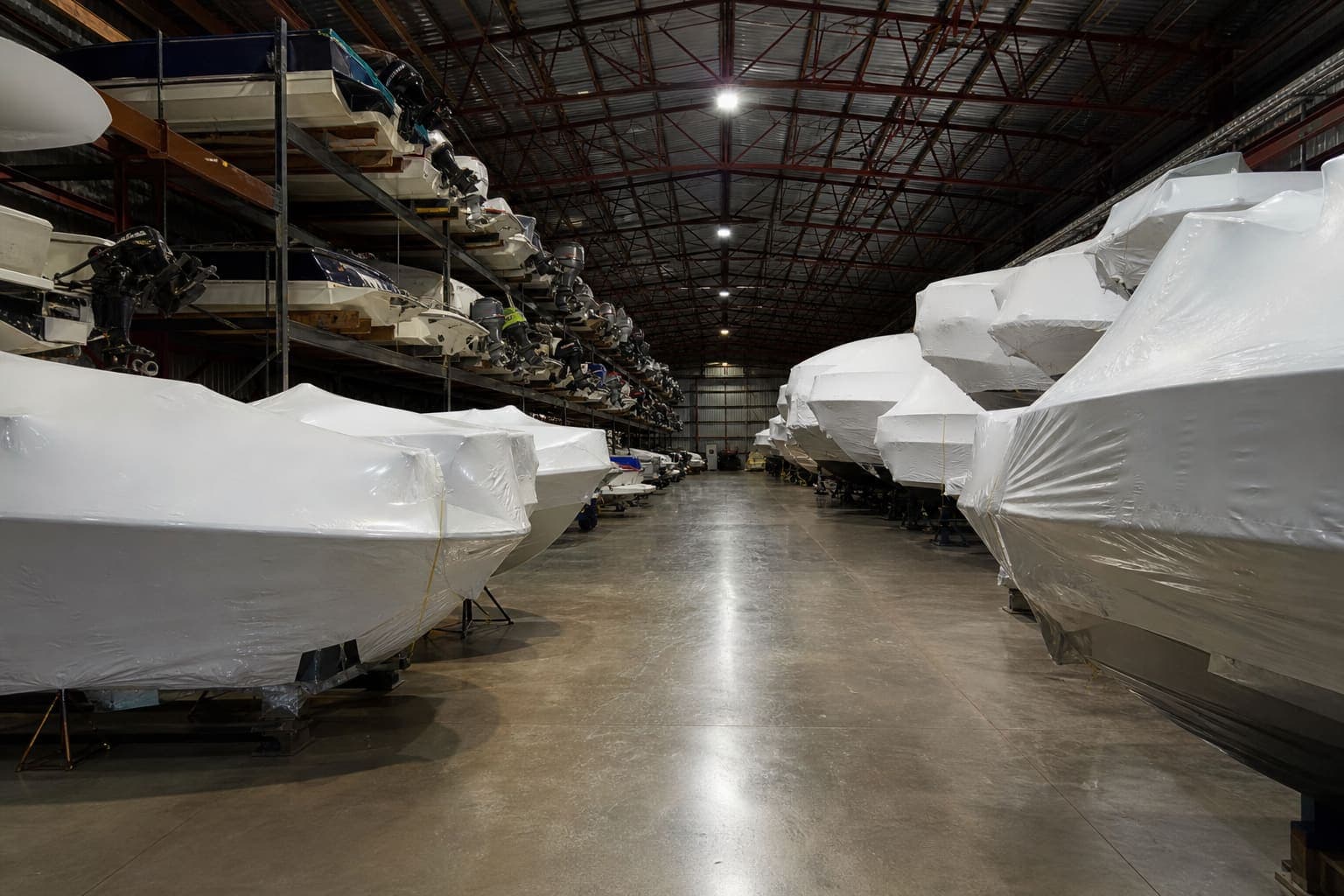
Quality winter storage facilities maintain secure, well-drained lots with proper blocking under vessels. Ask about blocking materials and block spacing — improper blocking is one of the most common causes of hull damage in winter storage. Good facilities use adjustable jackstands with the correct spacing for your hull type.
Security is important. A well-lit, fenced facility with access control and ideally camera monitoring provides peace of mind through the long winter months. Ask about incidents at the facility over the past few years when evaluating options.
Distance is a practical consideration. Some Chicago-area boaters transport boats to storage facilities in the suburbs for better pricing or larger indoor facilities. This adds transport cost — factor that in when comparing quoted storage rates.
What Chicago Winters Actually Do to Unprotected Boats
The physics of winter damage on unprotected boats in Chicago are straightforward and unforgiving. Water in any system that freezes expands approximately 9% in volume — engine cooling passages, raw water intake lines, live wells, and ballast systems all hold residual water that becomes ice in a Chicago winter. Ice expansion in a cast iron or aluminum engine block cracks the casting; in a fiberglass sea cock, it shatters the fitting.
Temperature swings in Chicago winters — the city regularly experiences freeze-thaw cycles where temperatures move from well below zero to above freezing within 24 hours — are more destructive to boat systems than steady cold. The repeated expansion and contraction of ice cycles stresses fasteners, causes gelcoat crazing, works moisture into laminate seams, and degrades materials that stay stable in steady temperatures. Chicago is notably harsh in this respect compared to consistently cold northern climates.
UV damage continues year-round, not just in summer. Snow and ice on deck reflect UV and can cause bleaching and deterioration of deck surfaces, upholstery, and non-skid during winter periods. Proper shrink wrap blocks UV from all angles and significantly reduces this off-season deterioration — it's not only about moisture and precipitation protection.
Coordinating with Chicago Harbors for Fall Haul-Out
Chicago Harbors coordinates haul-out scheduling for slip holders at each facility. The haul-out schedule typically runs in October, with larger facilities handling boats in sequence over several weeks. Slip holders who want to haul out before mid-October should communicate early with the harbor office — late-September haul-outs are sometimes available but require coordination with the haul crew schedule.
If your storage facility is not the same as your marina, you'll need to coordinate transportation between the two. A licensed marine transport company moves boats on custom trailers between the harbor and the storage yard. This adds cost compared to in-yard storage at the marina, but the premium storage facilities in the Chicago area are mostly independent businesses, not harbor-adjacent.
The haul-out itself is the logical trigger for winterization service. Many boaters arrange to have their marine mechanic meet them at the haul-out location to perform winterization immediately while the boat is accessible and the engine can be flushed with antifreeze before draining. Coordinating the mechanic's schedule with the haul-out date prevents waiting and reduces the risk of a cold snap arriving before winterization is complete.
De-Winterizing in Spring: The Return Checklist
Spring de-winterization is the mirror of fall winterization, but with the added attention of inspecting what happened during storage. Begin with a walk-around of the entire boat looking for winter damage: cracks in the hull, crazing in the gelcoat, damage to standing rigging and shrouds, signs of animal intrusion (mice occasionally enter boats in outdoor storage), and any deformation of structural elements that might indicate improper blocking.
The engine systems need specific de-winterization attention. Remove any fogging oil from cylinders, reconnect the raw water intake, replace the raw water impeller (annually for boats in regular use), and change engine oil and filter if not done at fall haul-out. Add fuel and run the engine first in a flushing tank or with a hose fitting, not in open water, to verify cooling function before returning to the harbor.
Schedule a de-winterization appointment with a marine mechanic in February or March — not in April. Spring is the busiest time for marine service in Chicago, and waiting until boats are already in the water to discover winterization issues means waiting for a shop slot that may be weeks out. Early scheduling ensures you're at the front of the queue and avoids missing the first good boating weekends of May while waiting for service.
Evaluating and Improving Your Boat Before Spring Launch
Winter storage is also an opportunity to address known issues with your boat before the season begins. Items that were 'deal with it next year' problems at fall haul-out become 'fix this before we launch' items during winter. Gelcoat repairs, upholstery replacement, canvas updates, and electronics upgrades are all better handled in the off-season when marine shops are less backlogged and you're not missing boating days waiting for service.
Performance upgrades — new propeller, improved navigation electronics, an upgraded sound system — are best researched and ordered in winter when you have time to evaluate options carefully and get installation scheduled without urgency. Rushing these decisions during the season often leads to suboptimal choices or installation delays that cut into boating time. The off-season is when thoughtful boat improvement happens.