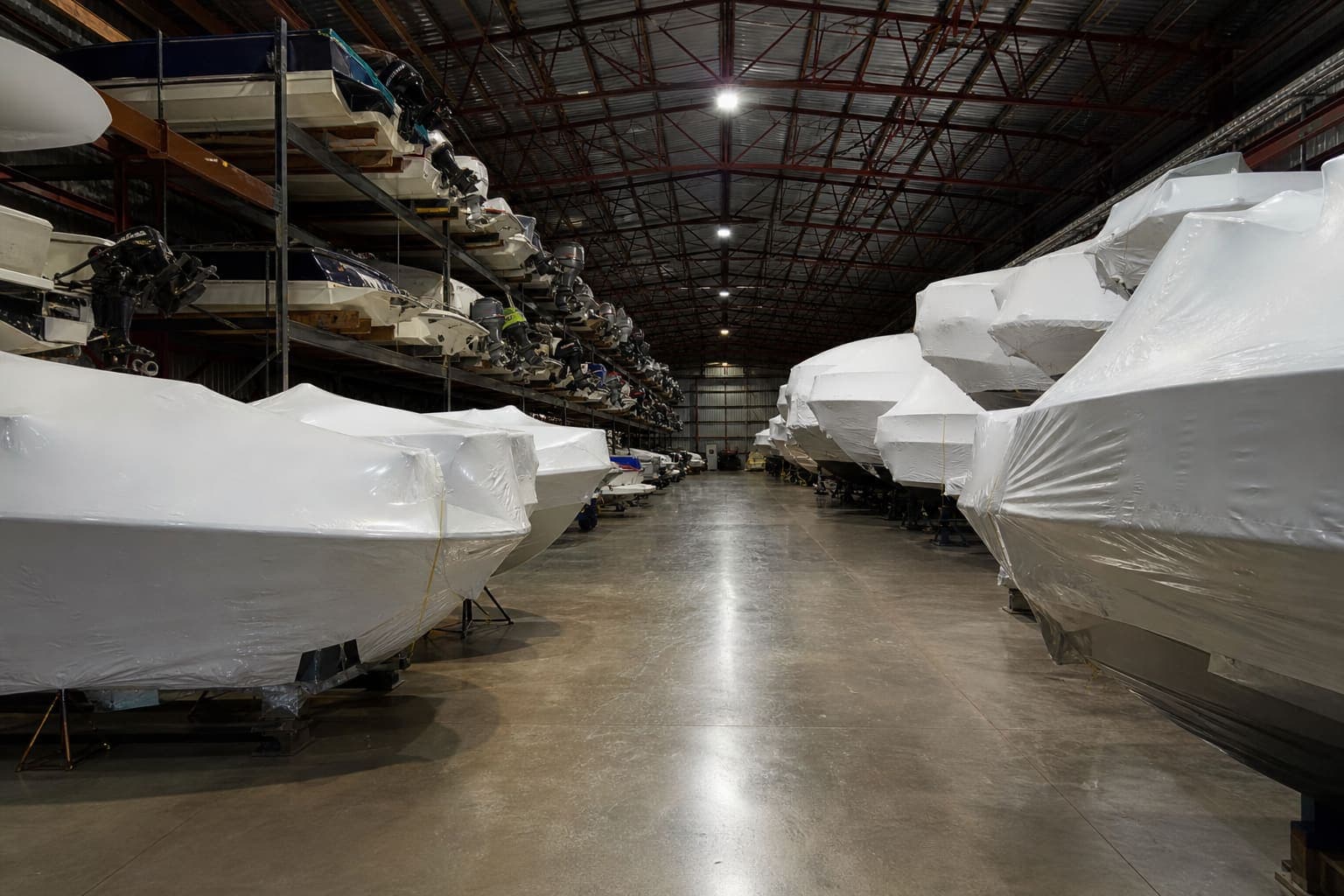
What shrink wrap is for
Professional shrink wrap typically uses a heat-shrink film over a support frame so water and snow shed instead of pooling on canvas or cockpit covers. Yards often include zipper doors for winter access. Ask what is included: framing, vents, door, tape quality, and whether the quote covers mid-winter repairs after storms.
Indoor heated storage may not need shrink wrap. Outdoor rack or yard storage usually benefits from it in this climate. Confirm with your storage operator — some require professional wrap and prohibit DIY heat work on-site.
Ventilation and moisture
A sealed plastic cocoon without adequate ventilation can trap condensation, encouraging mildew on cushions and corrosion on metal. Professional installs commonly include vents and airflow paths. Do not “improve” a wrap by sealing every opening shut without understanding moisture management.
Remove soft goods you care about when possible, or follow your detailer’s storage advice. Mildew remediation in spring is more expensive than careful fall prep.
Inspection after snow and ice
Heavy wet snow and ice storms can tear film or collapse light framing. If your boat is in outdoor storage you can access, inspect after major events and call the yard for repairs rather than improvising with random tarps that pond water.
Document damage for the storage facility. Mid-winter wrap repairs are a normal line item in Chicago — ask about response time when you book fall wrap.
Disposal and recycling
Used shrink wrap is a disposal issue. Some yards recycle film; others require you to haul it. Ask before spring unwrap day so plastic does not end up as mixed landfill waste by default. Follow the facility’s rules — do not abandon film in harbor dumpsters that are not set up for it.
Reuse is rarely appropriate for structural winter wraps; UV and heat cycles weaken film. Treat wrap as seasonal consumable infrastructure, not a multi-year tarp.